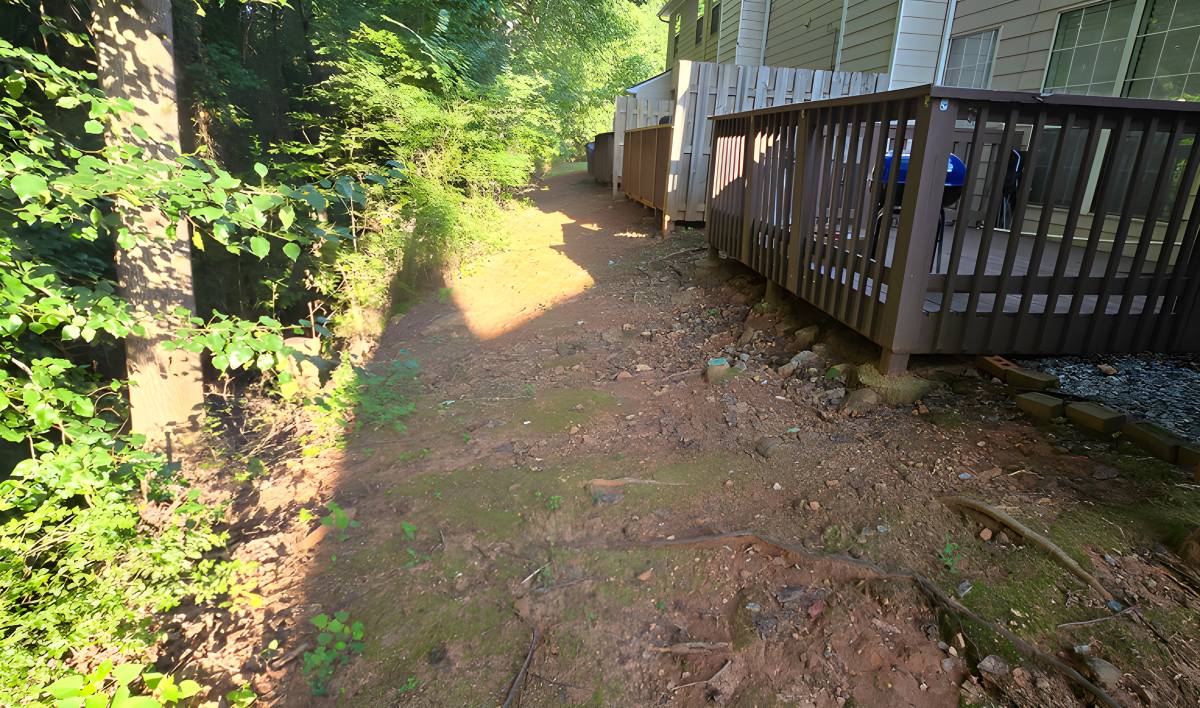

Narrow side yards between homes often become neglected problem areas where poor drainage, mud, and overgrown vegetation make access difficult and unappealing. This image shows a freshly installed gravel pathway that transforms a challenging space into a functional access route while solving drainage issues. The crushed stone application provides stable footing, prevents erosion, and directs water flow away from building foundations.
Professional site preparation and proper grading make the difference between gravel pathways that perform well for years and those that quickly develop low spots, shifting stones, and drainage problems. Understanding the process and materials involved helps property owners make informed decisions about addressing side yard challenges.
Why Side Yards Need Special Attention
The narrow spaces between homes present unique challenges that standard lawn areas don’t face. Limited sunlight prevents healthy grass growth, creating bare dirt patches that turn muddy during rain. Water runoff from roofs, HVAC units, and neighboring properties often concentrates in these confined areas, exacerbating erosion and drainage problems. Without proper treatment, these spaces become eyesores and sources of ongoing maintenance headaches.
Side yards also serve important functional purposes as access routes to backyards, utility areas, and storage spaces. The pathway visible in this image provides stable passage that remains usable regardless of weather conditions. This accessibility proves especially valuable for moving equipment, accessing utilities, or maintaining property boundaries without tracking mud through other areas.
Site Preparation and Grading Fundamentals
Successful gravel pathway installation begins with thorough site preparation. The area must be cleared of existing vegetation, roots, and debris that could interfere with proper base compaction. The bare earth visible in this image indicates complete clearing that allows proper grading and material application.
Proper grading creates gentle slopes that direct water away from building foundations toward appropriate drainage areas. Even seemingly flat pathways require subtle grading to prevent water ponding. The sloped profile visible along this pathway ensures runoff from the deck and neighboring properties flows efficiently through rather than pooling on the surface.
Selecting Appropriate Gravel Materials
The crushed stone used for this pathway appears to be a mixed aggregate with varied earth tones that blend naturally with the surrounding landscape. Crushed gravel compacts better than rounded river rock because the angular edges interlock, creating a more stable walking surface. This compaction prevents the shifting and migration that makes rounded stone pathways difficult to walk on and prone to developing bare spots.
Size gradation in the stone mix contributes to stability. Smaller particles fill voids between larger stones, creating a denser, firmer surface. The varied colors visible in this application add visual interest while the neutral tones ensure the pathway doesn’t dominate the landscape aesthetically.
Drainage Solutions for Problem Areas
The pathway serves dual purposes as both access route and drainage channel. Water from the elevated deck, roof runoff, and upslope areas flows across and through the gravel, preventing the erosion and mud that previously plagued this space. The porous nature of gravel allows water to percolate through while the grading directs excess flow toward appropriate outlets.
For areas with severe drainage issues, subsurface drainage solutions may complement surface gravel. French drains or perforated pipes beneath the gravel layer collect and redirect water more aggressively. The relatively gentle terrain visible here likely didn’t require such measures, but properties with significant water problems benefit from these additional interventions.
Controlling Vegetation Along Pathways
Landscape fabric or weed barrier beneath the gravel helps prevent vegetation from growing through the stone layer. Without this barrier, grass, weeds, and other plants quickly colonize gravel pathways, requiring ongoing maintenance to maintain appearance and functionality. Professional installations include this critical step even though it’s not visible in finished projects.
The edges where gravel meets planted areas require particular attention. The transition visible along the left side of this pathway shows how gravel can be graded to meet existing soil without creating sharp dropoffs or migration issues. Edge restraints or borders can formalize these transitions if desired, though the natural edge shown here works well for informal applications.
Managing Runoff from Adjacent Structures
The elevated deck visible on the right creates concentrated runoff during rain events. Without proper management, this runoff would erode soil and create muddy conditions below. The gravel pathway absorbs and disperses this water, protecting both the pathway itself and the building foundations from water damage.
Properties with multiple runoff sources benefit from strategic gravel placement that intercepts water before it causes problems. This pathway likely receives water from roof gutters, deck drainage, and the neighboring property, making it an ideal location for permeable gravel treatment rather than impermeable paving that would simply redirect problems elsewhere.
Accessibility and Functional Benefits
Beyond drainage management, this pathway provides year-round access to the backyard and deck area. The stable gravel surface remains walkable in wet conditions, unlike bare soil that becomes impassable mud. For properties where side yard access is essential for lawn equipment, utility maintenance, or general movement, gravel pathways deliver practical value that justifies the installation investment.
The pathway width appears sufficient for comfortable single-file passage while efficient use of the limited space available. Wider pathways consume more area and require more material, while narrower versions may feel cramped or fail to adequately address drainage needs. This balanced approach serves both access and drainage functions effectively.
Cost-Effective Landscape Solutions
Gravel pathways represent one of the most economical hardscape solutions available. Material costs remain modest compared to pavers, concrete, or natural stone, while installation labor requirements are less intensive than alternatives requiring extensive excavation or specialized skills. For property owners seeking functional improvements without major budget commitments, gravel installations deliver excellent value.
Maintenance costs also remain minimal compared to other solutions. Occasional raking to redistribute stones and periodic additions to replace material that migrates or settles represent the primary ongoing needs. This low-maintenance characteristic makes gravel particularly appealing for side yards and utility areas where appearance matters less than function.
Long-Term Performance Expectations
Properly installed gravel pathways can perform well for many years with minimal intervention. The compacted base and adequate material depth visible in this installation suggest it will resist rutting, ponding, and other common problems. Over time, organic materials may accumulate on the surface, requiring periodic cleaning or fresh stone application to maintain appearance.
Settlement represents the primary long-term concern with gravel pathways. As base materials compact and settle, low spots may develop where water ponds or passage becomes uneven. Professional installation with proper base preparation minimizes this issue, though periodic maintenance may be necessary to address localized settlement that occurs.
Professional Installation Advantages
While gravel pathway installation appears straightforward, professional execution ensures proper grading, adequate material depth, and attention to drainage details that determine long-term success. Rock and Concrete Company brings experience in site assessment, material selection, and installation techniques to projects throughout McDonough, GA. Understanding how water moves across properties and selecting appropriate solutions for specific conditions requires expertise that prevents costly mistakes.
Quality contractors provide realistic expectations about project outcomes, material requirements, and ongoing maintenance needs. They also handle unexpected challenges like buried utilities, difficult access, or soil conditions requiring special treatment. For property owners considering gravel pathways or drainage improvements, working with experienced professionals ensures results that solve problems rather than creating new ones. Contact Rock and Concrete Company at (470) 696-7496 for expert hardscape and drainage solutions.